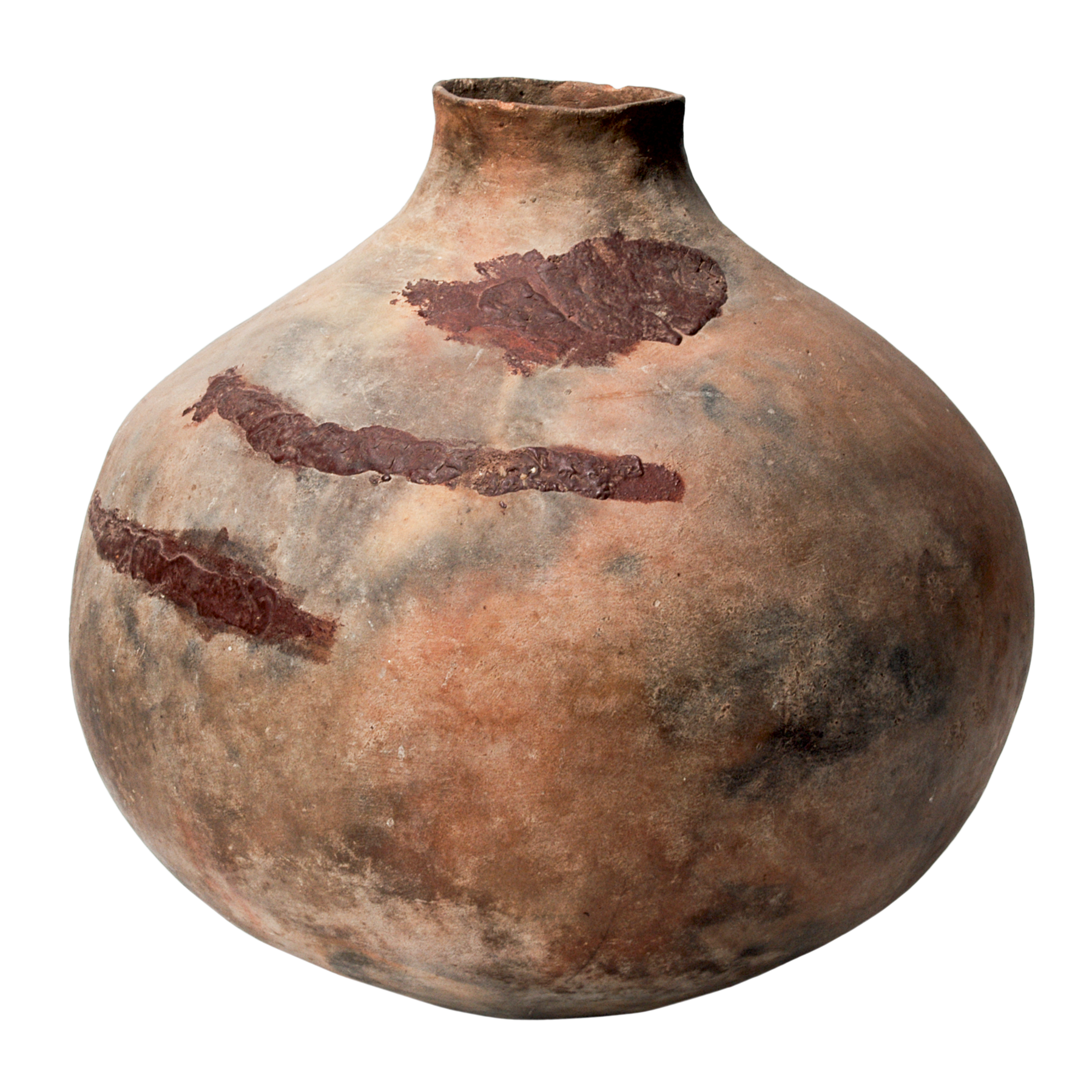
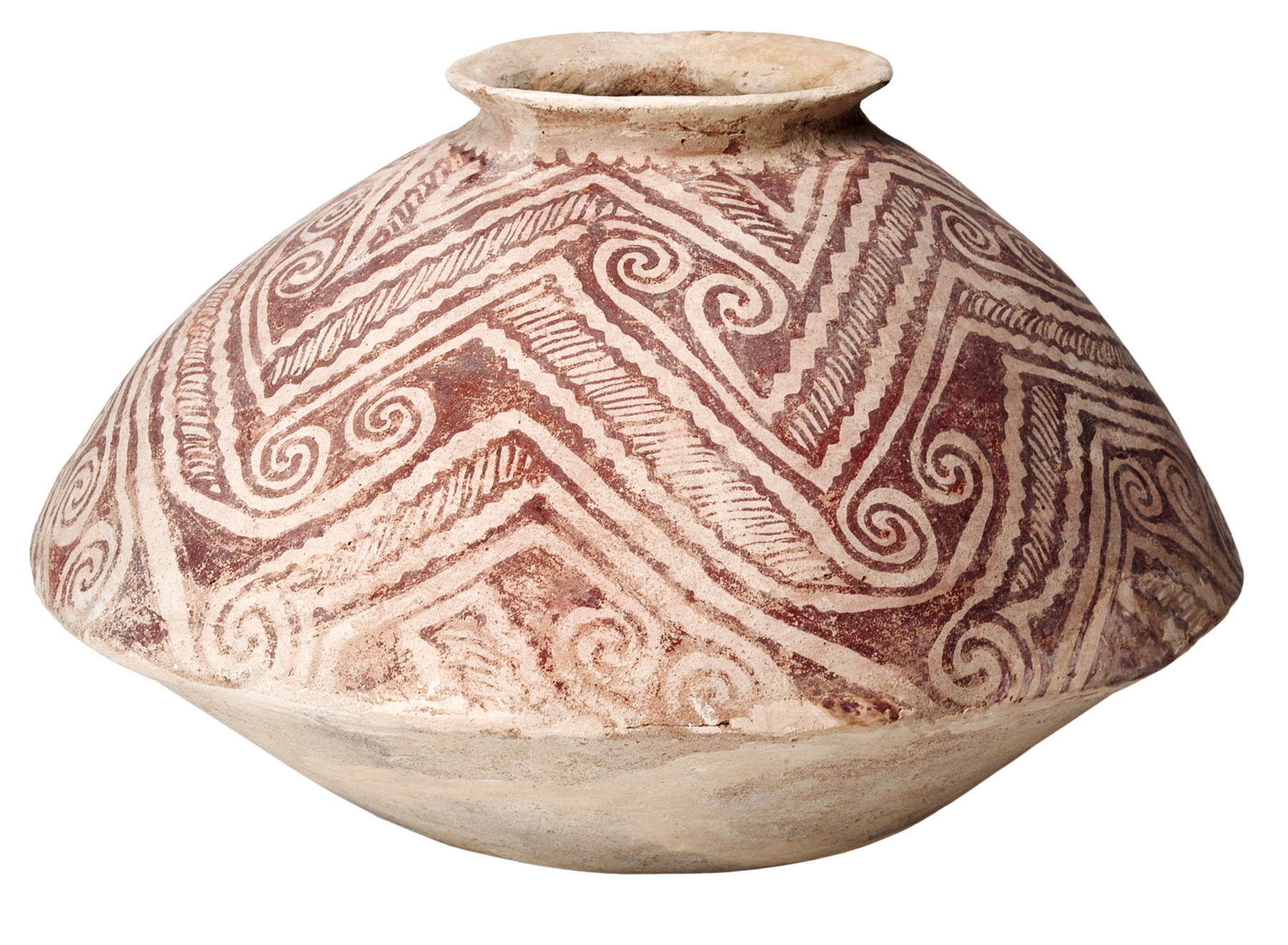
Pre-Hispanic and Protohistoric Pottery from the Sonoran Desert and the Lower Colorado River Valley
The earliest pottery vessels now known in the American Southwest have been found in the Sonoran Desert, in Tucson, and date as early as 50 CE. Clays in the Sonoran Desert and the lower Colorado River Valley are generally rich in iron and, as in the mountains to the north and east, potters preferred to fire their pots in oxidizing (oxygen-rich) atmospheres. The dominant pottery traditions in these regions involved the use of pink-firing or tan-firing clays, sometimes finished with a thin layer of buff-colored clay (a slip) and decorated with red paint made from hematite. Occasionally, polychrome pottery (featuring three or more colors) was produced. The major archaeological cultures recognized in these regions are the Early Formative and Hohokam of the Sonoran Desert, and the Patayan of the lower Colorado River Valley and the adjacent uplands of western Arizona.
CE stands for Common Era, a chronological convention equivalent to AD.